Women, credit, and debt in early modern Scotland by Cathryn Spence
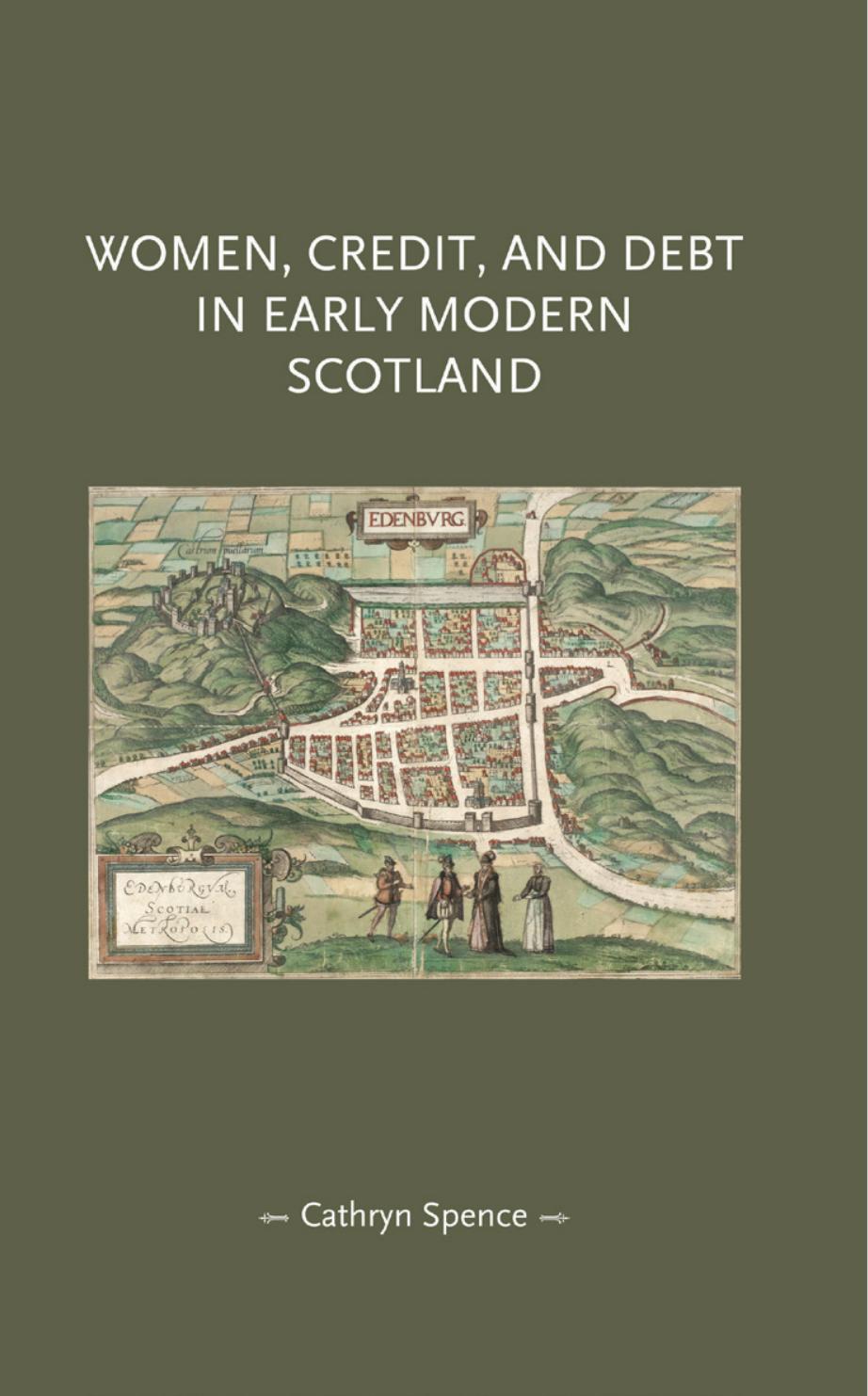
Author:Cathryn Spence [Spence, Cathryn]
Language: eng
Format: epub, pdf
Tags: History, Social History, Social Science, Women's Studies
ISBN: 9781784992538
Google: 0Hi1yAEACAAJ
Publisher: Manchester University Press
Published: 2016-01-15T02:59:47+00:00
Women in the ale trades in England and Scotland
The important roles played by women in the ale trades of England and Scotland have been well documented. The reasons for which women produced and sold ale in Scotland and England, and how their roles changed over time during the late medieval and early modern periods, have been a source of much discussion and debate among historians. Judith Bennett has charted the decline and disappearance of women from the ale trades in England between 1300 and 1600, arguing that a number of factors contributed to this phenomenon. The first was the growth of large ale-producing operations against which women, with less access to capital, were unable to compete, causing them to disappear from the ale trades as production became increasingly commercialised. In conjunction with this was the introduction of beer, which â thanks to the role of hops in its production that had to be imported from the Continent â was more expensive to produce and lasted longer than ale. The longer shelf life of beer negated the need for many individual producers to produce small batches of ale every few days to keep up with local demand and forced producers to invest in expensive equipment in order to engage in its production. Finally, the introduction of brewersâ guilds in England, which did not include women, or ranked them below their husbands, increased suspicion and regulation of those women who sold drink, whether in alehouses or on the streets, which in turn contributed to mounting patriarchal concern about women working outside of the home at all.3 Marjorie K. McIntosh agrees with Bennettâs assessment, but suggests that the disappearance of women from the ale trades was not a gradual process, but occurred more abruptly. She sees the transition to male dominance in ale brewing and selling beginning sometime between 1480 and 1530.4 Regardless of whether this transition occurred gradually or rapidly, by about 1600 women in England appear to have worked as independent brewers much less often than they had in the past. While women (and especially poor women) were still employed as servants and hucksters to sell drink to others in England, this work was generally considered to be of low status.
In Scotland, the experience of women in the ale trades followed a slightly different course. As previously mentioned, in the burgh court records between 1570 and 1640 the most common reason for which women participated in debt cases had to do with ale and, less commonly, beer. Given that ale was a day-to-day necessity, this is unsurprising. During the medieval period ale was the staple drink of a family, local water sources usually being of dubious quality. The demand for alcoholic beverages (and ale and beer in particular) would therefore have been immense in late medieval and early modern Scotland, and the role of producing or procuring it probably would have fallen to the female head of the household. The tendency for wives to be prevalent in the production of ale
Download
Women, credit, and debt in early modern Scotland by Cathryn Spence.pdf
This site does not store any files on its server. We only index and link to content provided by other sites. Please contact the content providers to delete copyright contents if any and email us, we'll remove relevant links or contents immediately.
The Vikings: Conquering England, France, and Ireland by Wernick Robert(84419)
Ali Pasha, Lion of Ioannina by Eugenia Russell & Eugenia Russell(40334)
The Conquerors (The Winning of America Series Book 3) by Eckert Allan W(38067)
The Vikings: Discoverers of a New World by Wernick Robert(37024)
Cecilia; Or, Memoirs of an Heiress — Volume 1 by Fanny Burney(32654)
Cecilia; Or, Memoirs of an Heiress — Volume 2 by Fanny Burney(32023)
Cecilia; Or, Memoirs of an Heiress — Volume 3 by Fanny Burney(32005)
Empire of the Sikhs by Patwant Singh(23150)
The Secret History by Donna Tartt(19352)
Hans Sturm: A Soldier's Odyssey on the Eastern Front by Gordon Williamson(18664)
Cat's cradle by Kurt Vonnegut(15466)
Pimp by Iceberg Slim(14710)
Sapiens: A Brief History of Humankind by Yuval Noah Harari(14480)
Norse Mythology by Gaiman Neil(13472)
Talking to Strangers by Malcolm Gladwell(13471)
Leonardo da Vinci by Walter Isaacson(13427)
4 3 2 1: A Novel by Paul Auster(12541)
Underground: A Human History of the Worlds Beneath Our Feet by Will Hunt(12172)
The Radium Girls by Kate Moore(12112)
